

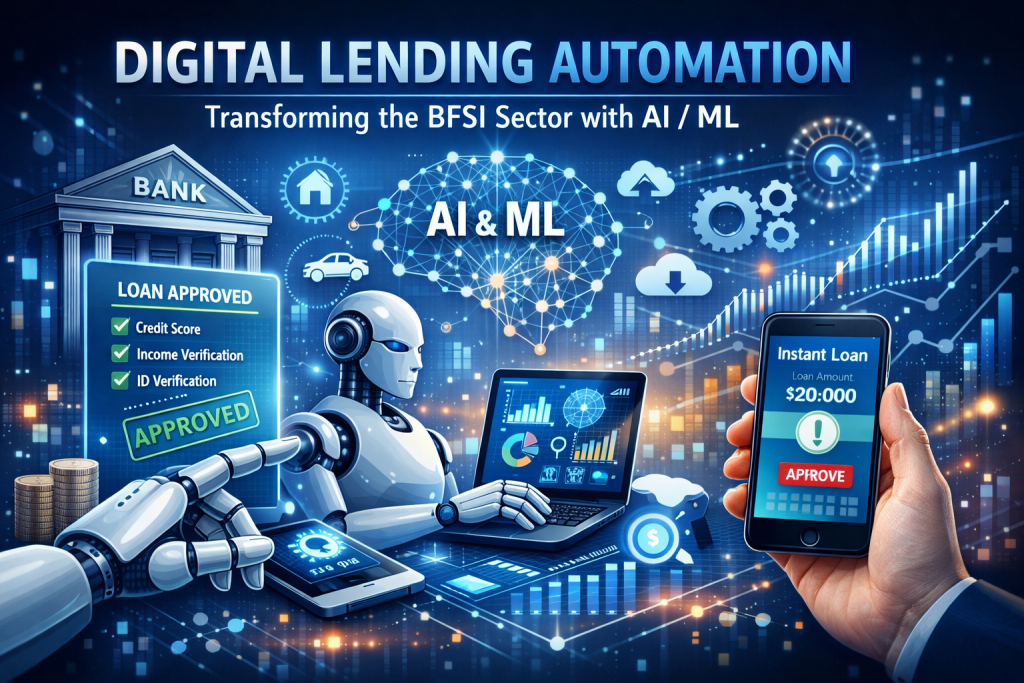
DIGITAL LENDING AUTOMATION
Transforming BFSI with AI/ML
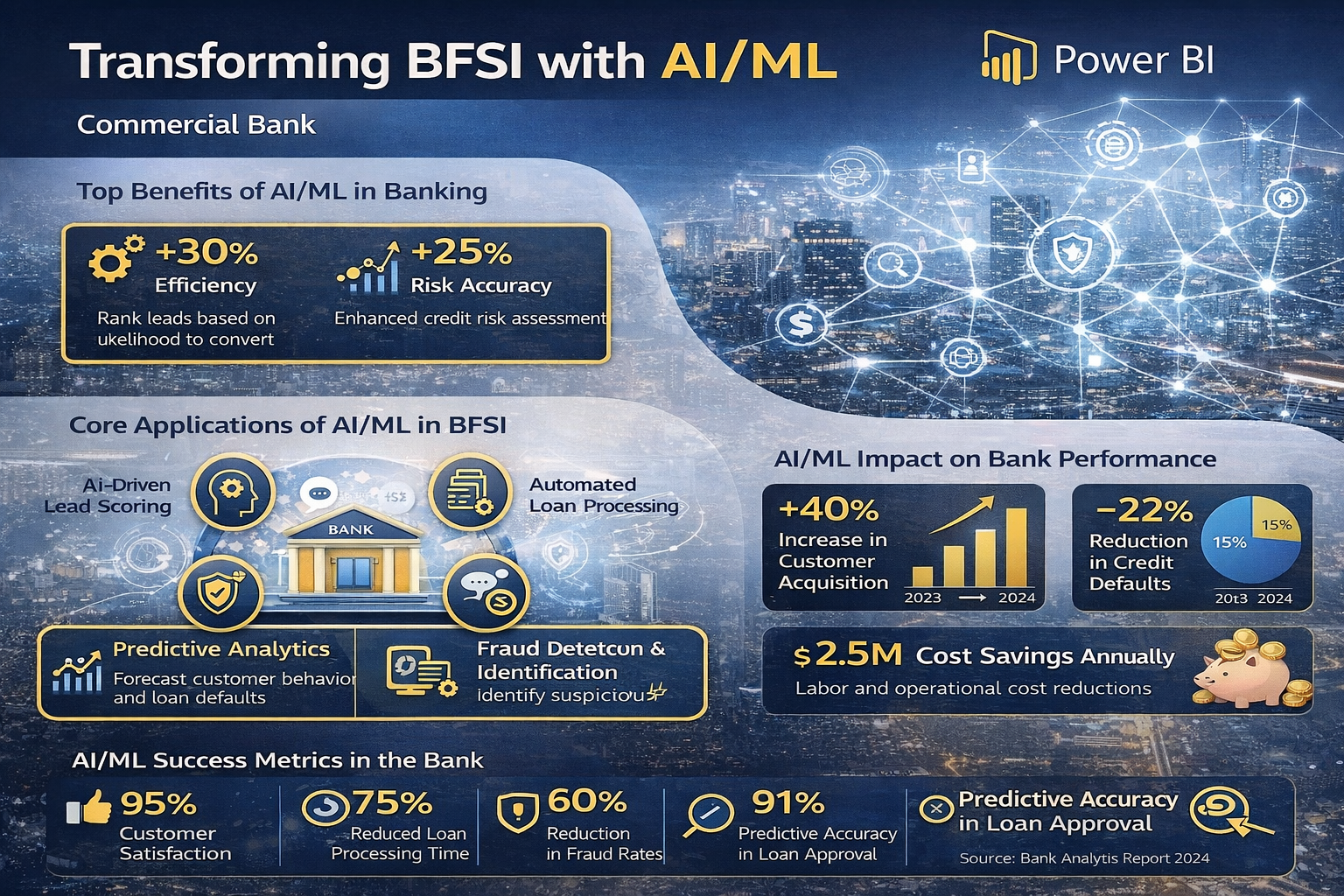
Digital lending automation represents a paradigm shift in the Banking, Financial Services, and Insurance (BFSI) sector, leveraging Artificial Intelligence and Machine Learning to streamline, optimize, and revolutionize credit delivery systems. This transformation is moving lending from weeks to minutes while simultaneously reducing risk and enhancing customer experience.
Core Components of AI/ML-Powered Lending Automation
1. Intelligent Customer Acquisition
AI-driven lead scoring identifies high-intent customers using behavioral analytics
Predictive analytics for pre-approved offers based on alternative data sources
Chatbot-assisted initial inquiries and application initiation
Omnichannel integration across web, mobile, and partner platforms
2. Automated Application Processing
Smart document processing using Computer Vision and OCR
Automated data extraction from bank statements, tax documents, and IDs
Real-time form validation and auto-completion
Biometric verification for identity authentication
3. Advanced Credit Decisioning
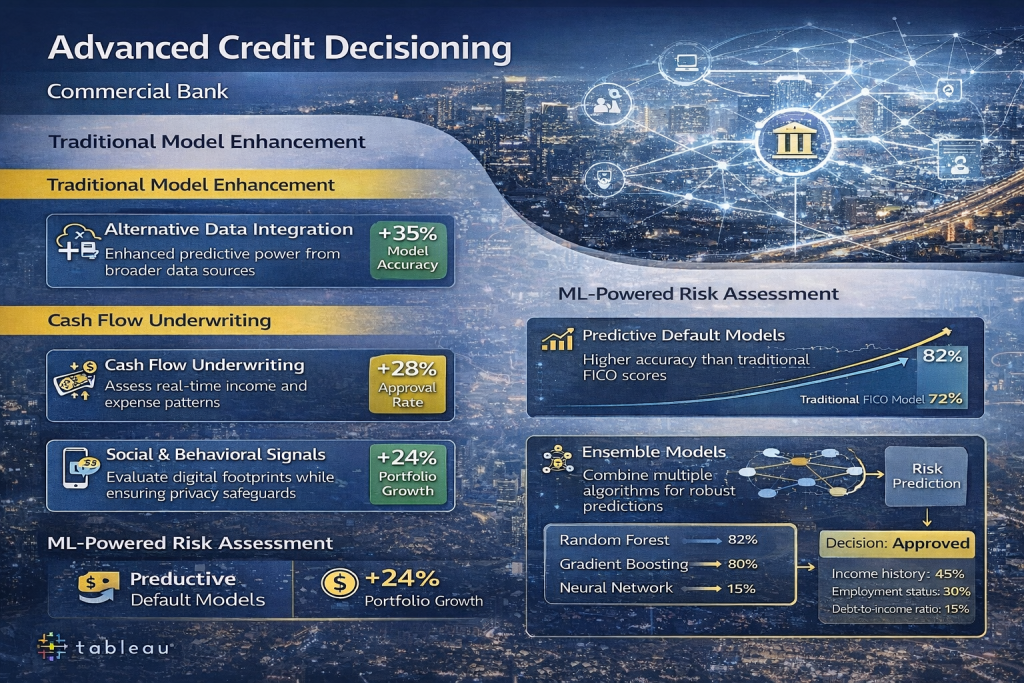
Traditional Model Enhancement
Alternative data integration: Utility payments, rent history, e-commerce behavior
Cash flow underwriting: Real-time analysis of bank transactions
Social and behavioral signals (with privacy safeguards)
ML-Powered Risk Assessment
Predictive default models with higher accuracy than traditional FICO scores
Ensemble models combining multiple algorithms for robust predictions
Explainable AI (XAI) providing transparent rationale for decisions
4. Automated Compliance & Fraud Detection
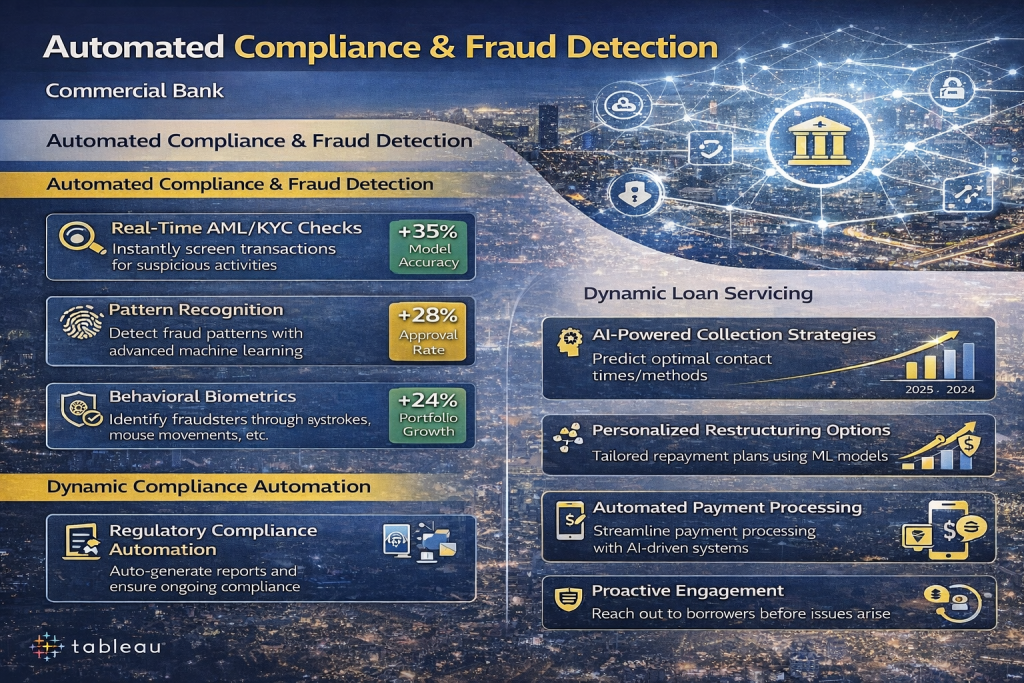
Real-time AML/KYC checks against global databases
Pattern recognition for identifying synthetic identities
Behavioral biometrics detecting anomalies during application
Regulatory compliance automation adapting to changing requirements
5. Dynamic Loan Servicing
AI-powered collection strategies predicting optimal contact times/methods
Personalized restructuring options using ML models
Automated payment processing with smart exception handling
Proactive engagement for at-risk accounts
Transformational Impact on BFSI
For Lenders:
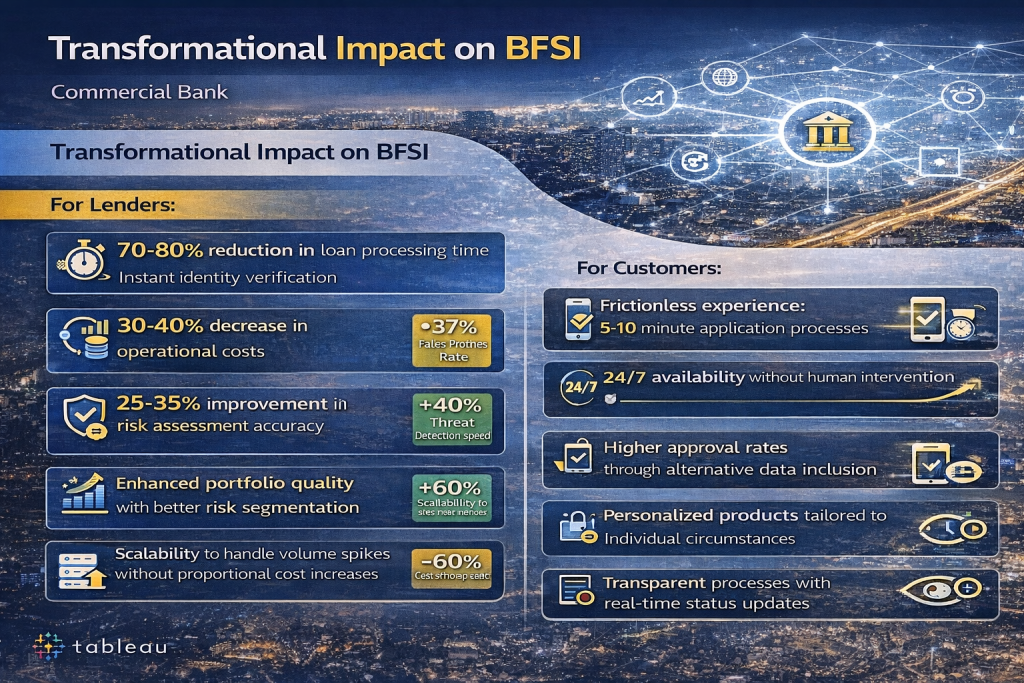
70-80% reduction in loan processing time
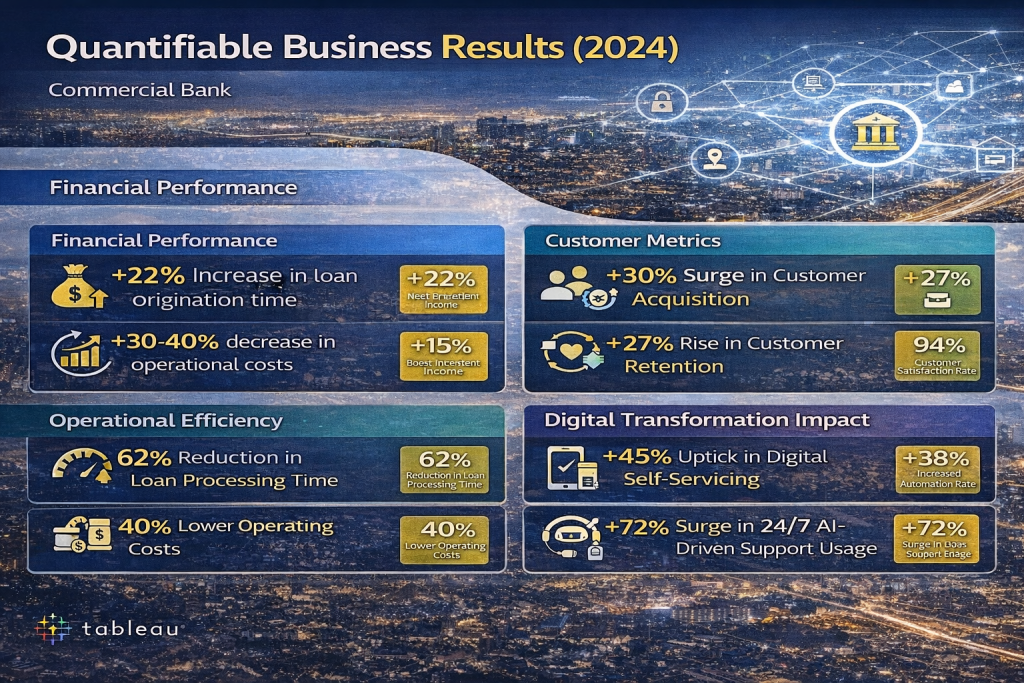
30-40% decrease in operational costs
25-35% improvement in risk assessment accuracy
Enhanced portfolio quality with better risk segmentation
Scalability to handle volume spikes without proportional cost increases
For Customers:
Frictionless experience: 5-10 minute application processes
24/7 availability without human intervention
Higher approval rates through alternative data inclusion
Personalized products tailored to individual circumstances
Transparent processes with real-time status updates
Case Study: DBS Bank’s AI-Powered Transformation
Client: DBS Bank (Digital Bank of Singapore)
Background: Founded in 1968, DBS is Southeast Asia’s largest bank with operations across 18 markets
Assets: ~$740 billion (2024)
Vision: “To be the best bank for a better world” through digital innovation
Financial Performance
| Metric | 2014 (Pre-AI) | 2024 (Post-AI) | Change | Color Indicator |
|---|---|---|---|---|
| Market Capitalization | $32 Billion | $98 Billion | +206% | 🟢 |
| Digital Revenue Share | 22% | 58% | +36 percentage points | 🟢 |
| Cost-Income Ratio | 44% | 37% | -7 percentage points | 🟢 |
| Return on Equity (ROE) | 10.2% | 15.6% | +5.4 percentage points | 🟢 |
| Stock Performance | – | Outperformed STI by 180% | – | 🟢 |
Customer Metrics
| Metric | 2014 | 2024 | Change | Color Indicator |
|---|---|---|---|---|
| Digital Customer Base | 2.1 Million | 8.9 Million | +324% | 🟢 |
| Mobile Transactions | 21% | 78% | +57 percentage points | 🟢 |
| Net Promoter Score (Retail) | 38 | 68 | +30 points | 🟢 |
| App Store Rating | 2.8 ⭐ | 4.8 ⭐ | +2.0 stars | 🟢 |
| Average Service Time | 8 minutes | 45 seconds | -91% | 🟢 |
Future Trends & Evolution
Next-Generation Capabilities:
Federated Learning: Collaborative models without sharing sensitive data
Quantum Computing: Solving complex optimization problems
Blockchain Integration: Immutable loan agreements and smart contracts
IoT Data Integration: Real-time asset monitoring for secured lending
Market Projections:
Global AI in fintech market to reach $61.3 billion by 2031 (CAGR: 23.5%)
Digital lending platforms to process over 60% of all loans by 2027
Embedded lending becoming standard in e-commerce and SaaS platforms
Implementation Roadmap
Phase 1 (0-6 months):
Proof of concept with single product line
API integration with core systems
Basic automation of document processing
Phase 2 (6-18 months):
Expanded product coverage
Advanced ML models for risk assessment
Omnichannel customer experience
Phase 3 (18-36 months):
Full AI-powered lending ecosystem
Predictive customer lifecycle management
AI-driven product innovation
Conclusion
Digital lending automation powered by AI/ML is not merely an efficiency tool but a fundamental reimagining of credit delivery. The transformation enables democratized access to credit, superior risk management, and sustainable profitability in an increasingly competitive landscape. Financial institutions that successfully implement these technologies will gain significant competitive advantages, while those who lag risk obsolescence in the evolving digital financial ecosystem.
The convergence of advanced analytics, automation, and customer-centric design is creating a new paradigm where lending decisions are faster, fairer, and more accurate than ever before, ultimately driving financial inclusion and economic growth while maintaining robust risk management standards.
Financial Performance
| Metric | 2014 (Pre-AI) | 2024 (Post-AI) | Change | Color Indicator |
|---|---|---|---|---|
| Market Capitalization | $32 Billion | $98 Billion | +206% | 🟢 |
| Digital Revenue Share | 22% | 58% | +36 percentage points | 🟢 |
| Cost-Income Ratio | 44% | 37% | -7 percentage points | 🟢 |
| Return on Equity (ROE) | 10.2% | 15.6% | +5.4 percentage points | 🟢 |
| Stock Performance | – | Outperformed STI by 180% | – | 🟢 |